
Don’t Just Renew. Strategize
Renewing Is Routine. Strategy Is Rare.
I help owner-led businesses with 15–100 employees move from reactive renewals to structured, long-term health plan strategy.
No pressure. Just clarity.

A Trusted Authority



Renewing plans — not improving performance.
Why Most Small Businesses Stay Stuck in Annual Renewals
A brief explanation of why most health plans are managed reactively — and how structured strategy changes long-term outcomes.
Smart planning today. Better results tomorrow.

Clarity beats comparison every time.
You Don’t Need More Quotes. You Need Clear Judgment
Health plan decisions affect your company’s cash flow, employee retention, and long-term stability. They deserve more than an annual spreadsheet comparison.
Over the past several years, I’ve worked with more than 500 clients across South Georgia and North Florida, helping them navigate complex insurance decisions with clarity and structure.
500+ Five-Star Reviews
Known for clarity-first explanation of complex coverage structures
Trusted advisor to owner-led businesses throughout the region
The objective isn’t to introduce something exotic.
It’s to help you make smarter, more structured decisions year after year.
Clarity creates control.
The Problem Isn’t a Lack of Options It’s a Lack of Structure.
Annual renewals prioritize short-term premium adjustments — not long-term cost stability.

Decisions are often made under deadline pressure.

Small employers evaluate funding options without a multi-year roadmap

Employee education is rushed, increasing confusion and volatility.
Over time, this renewal cycle compounds cost, instability, and frustration — even when good intentions are present.
Don’t Just Renew. Strategize
A More Deliberate Way to Manage Benefits
Instead of approaching benefits as a once-a-year transaction, I structure them as a multi-year strategy aligned with your company’s size, risk tolerance, workforce dynamics, and long-term goals.
Step 1 – Clarify

Review your current structure, funding model, claims patterns, and workforce profile.
Step 2 – Design

Build a plan aligned with your company’s size, culture, and risk tolerance — not just short-term premium.
Step 3 – Sequence
Implement changes deliberately with a multi-year roadmap focused on stability and efficiency.

Don’t Just Renew. Strategize
What This Looks Like in Practice
Structured strategy may involve evaluating and sequencing options such as:
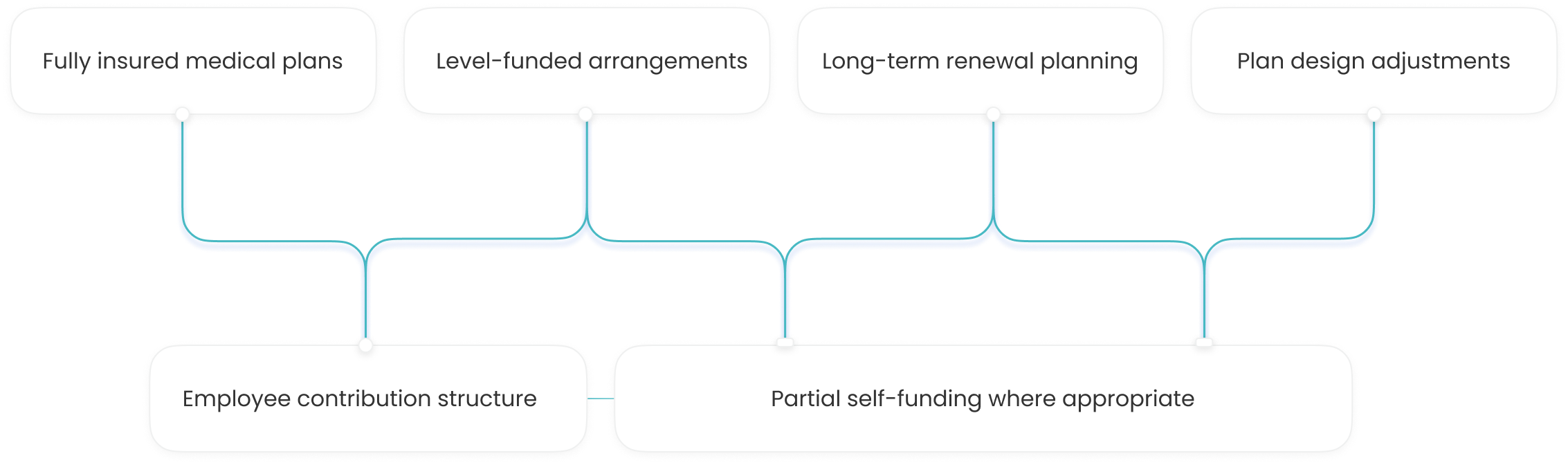
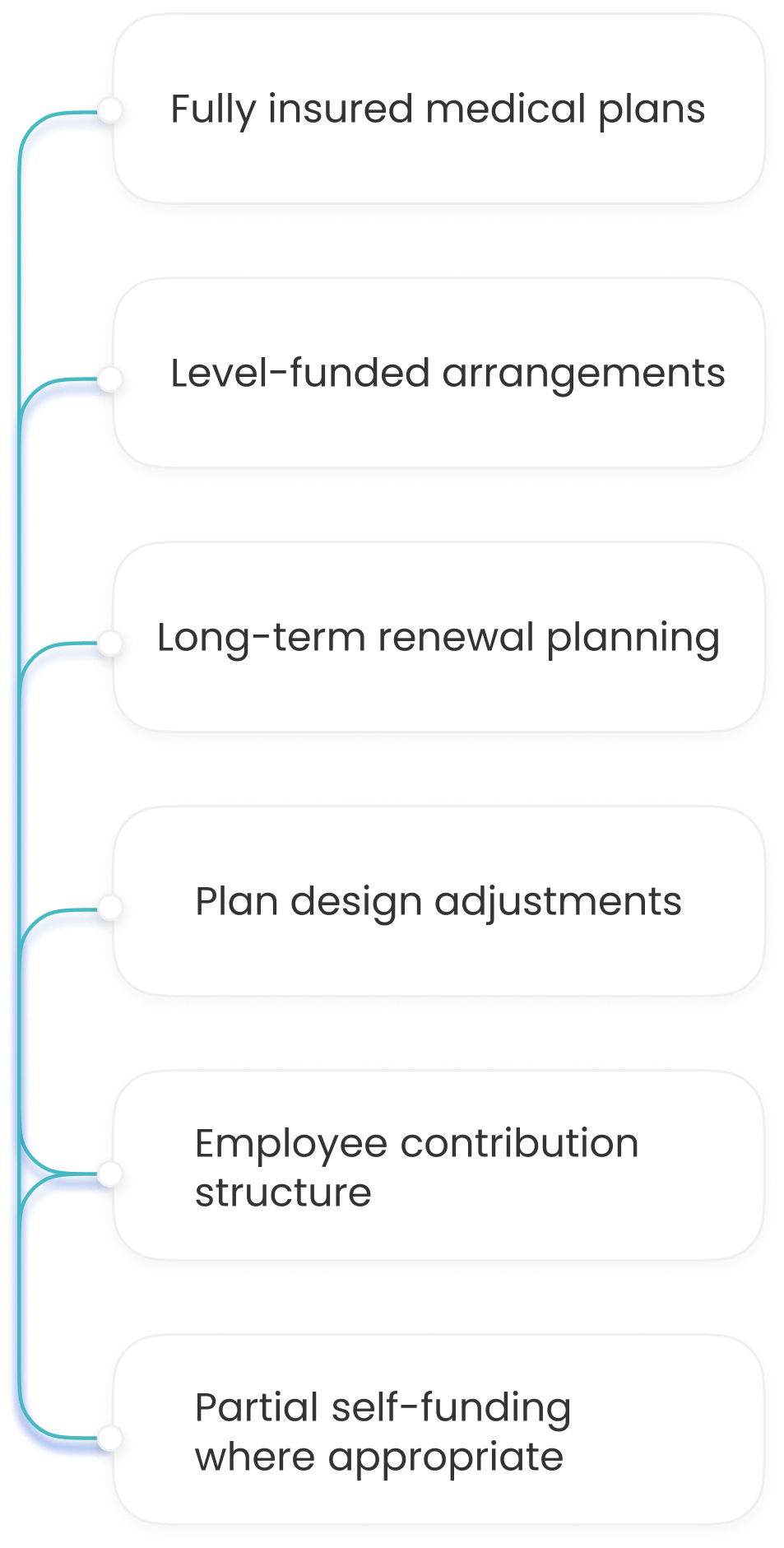
The goal isn’t to chase novelty. It’s to determine what fits your company and implement it deliberately.
Strong foundations
Stability Is the Goal. Savings Follow.
The objective isn’t just a lower premium this year. It’s a plan that performs more consistently over time.


Add a Title
Budgeting becomes more predictable

Add a Title
Renewal volatility decreases

Add a Title
Decision-making improves

Add a Title
Employees better understand their benefits

Add a Title
Long-term costs stabilize instead of spiking
Choose your path
Who This Strategy Is Built For
This Approach Is a Fit If
You run an owner-led business with 15–100 employees.
You’re open to multi-year thinking.
You value structure over short-term rate shopping.
You’re willing to review plan design and funding alignment.
This May Not Be a Fit If
You’re only looking for the lowest quote this year.
You prefer to revisit benefits decisions once a year.
You want dramatic change without long-term planning.

Get Started today
If You’re Ready to Move Beyond Reactive Renewals
Let’s start with a structured review of your current health plan
In 20 minutes, we’ll:
Identify what’s driving recent increases
Discuss whether your funding structure fits your company.
Outline deliberate next steps — if they make sense.



